
- Home
- AntiMicrobial Fire Retardant Enamel
- AlkydSilicone Alkyds
- Army Corps Paints
- Gov't Specification Paints
- Polyaspartic Coatings
- Projects
- Chem-Thane DCP Flex
- Chemical Resistance Chart
- Polyaspartic Advantages
- Polyspartic Color Chart
- Moisture Cure Urethanes
- CHEM-TAR 2808
- Zinc-Thane 2805
- Zinc-Thane 2806
- Chem-Thane 2821
- Chem-Thane 2822HS
- CHEM-THANE 2823
- Chem-Thane 2823HS
- DOT Bridge Coatings
- SSPC Paints
- Zinc Rich Coatings
- Marine Coatings
- Floor Coatings
- Epoxy Primers - Finishes
- Epoxy Mastics - Coal Tar Epoxies
- Polyurethanes
- Vinyls - Chlorinated Rubbers
- Tank Coatings
- Railcar Coatings
- MPI Paints
- Container Coatings
- Heat Resistant Coatings
- Architectural - Masonry Paints
- Wastewater Coatings
- Private Label - Toll Manufacture
- Specification Writing Guide
- Surface Preparation
- Project Profiles
- Contact Us
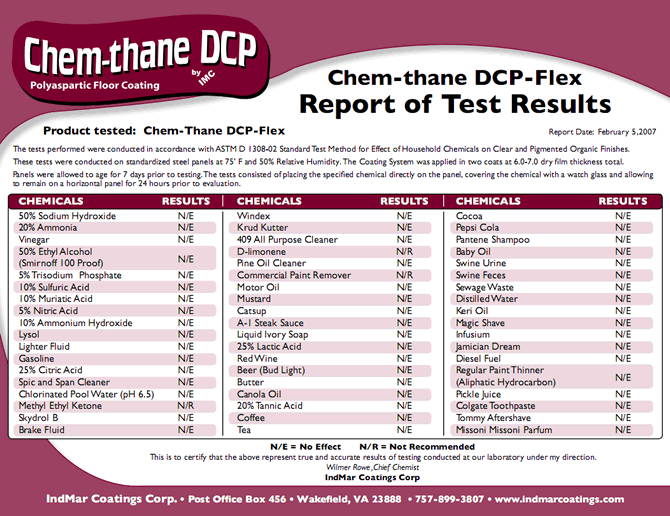
Polyaspartic Coatings » Chem-thane DCP-Flex Floor Coating Chemical Resistance Chart
The tests performed were conducted in accordance with ASTM D 1308-02 Standard Test Method for Effect of Household Chemicals on Clear and Pigmented Organic Finishes.
These tests were conducted on standardized steel panels at 75’ F and 50% Relative Humidity. The Coating System was applied in two coats at 6.0-7.0 dry film thickness total.
Panels were allowed to age for 7 days prior to testing. The tests
consisted of placing the specified chemical directly on the panel,
covering the chemical with a watch glass and allowing
to remain on a horizontal panel for 24 hours prior to evaluation.
Click here to
download the chart (PDF)